Never use an oven or range top as a space heater. Using these appliances for heat can pose serious safety risks including fire hazards and carbon monoxide (CO) exposure.
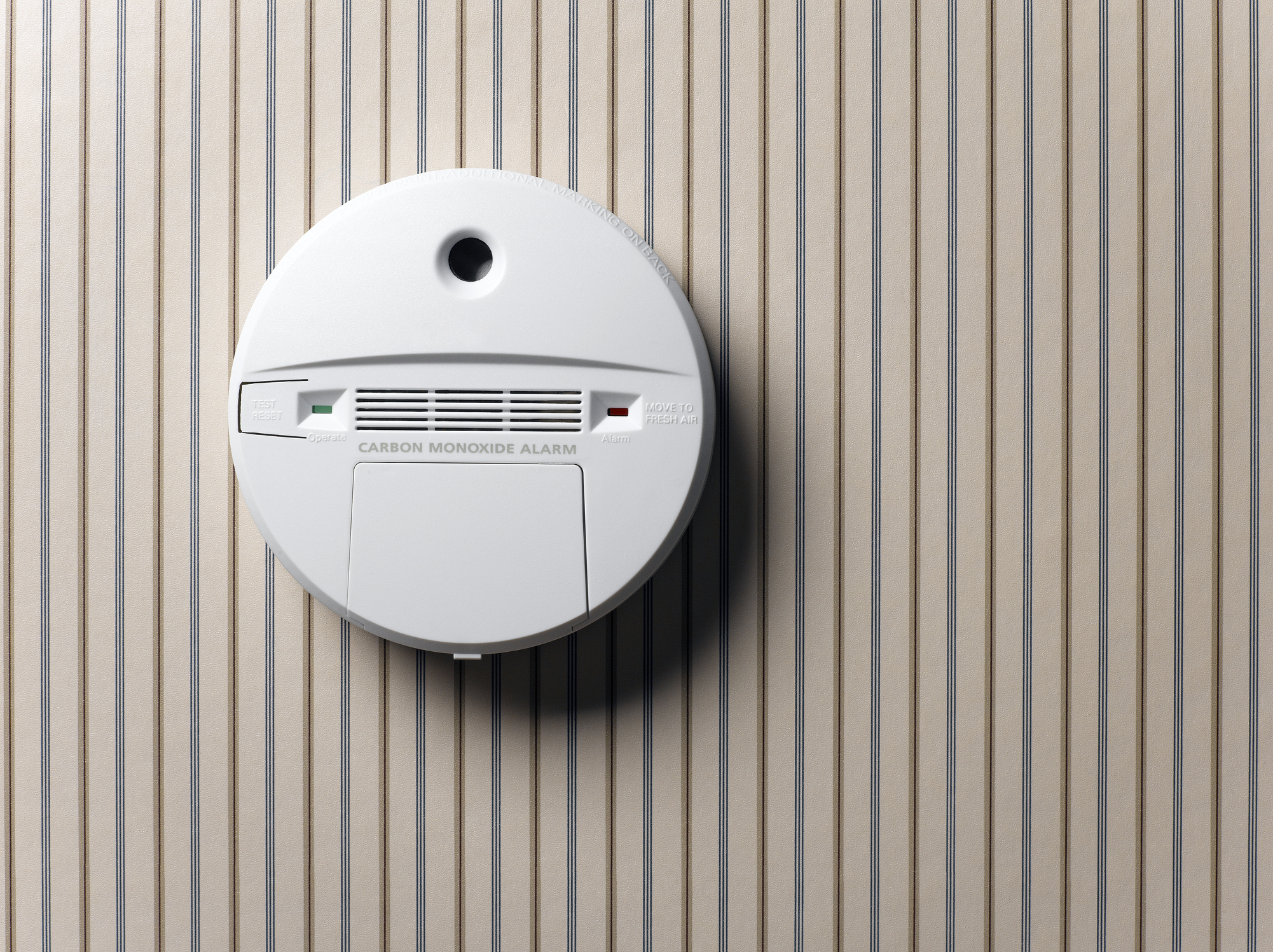
Install a carbon monoxide detector on every floor of your business. Make sure fuel-powered appliances are properly vented so CO doesn't build up.
Space heaters should be placed on a level surface and plugged directly into a wall outlet. Keep space heaters at least 3 feet away from anything flammable. Never leave a space heater unattended.
Avoid using multiple power strips or adaptors. Exceeding an outlet’s electrical capacity can cause a fire.
Maintain heating systems. Schedule regular maintenance for your heating and HVAC systems to ensure they function optimally during the winter season. Clean or replace filters, check thermostats and bleed radiators if necessary.
Protect sensitive equipment. Cold temperatures and wind chill can harm sensitive equipment and lead to equipment breakdown. Ensure your tools and machinery are stored in temperature-controlled areas or use protective covers to shield them from extreme temperature fluctuations.
Gas Safety
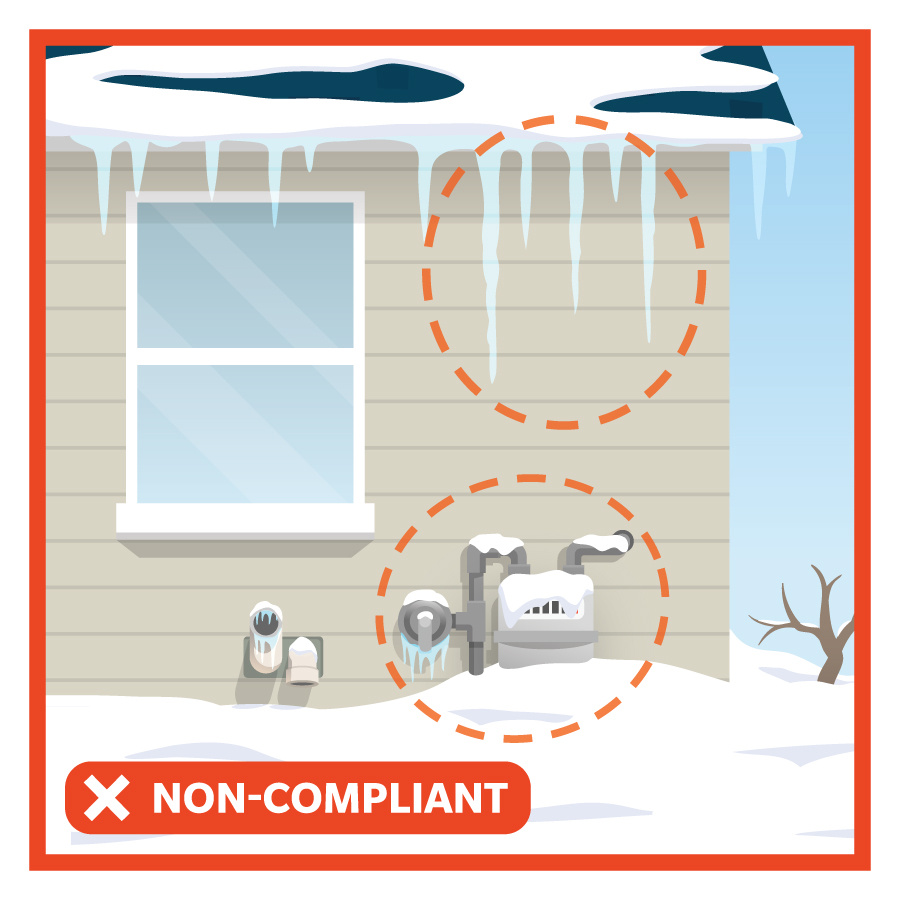
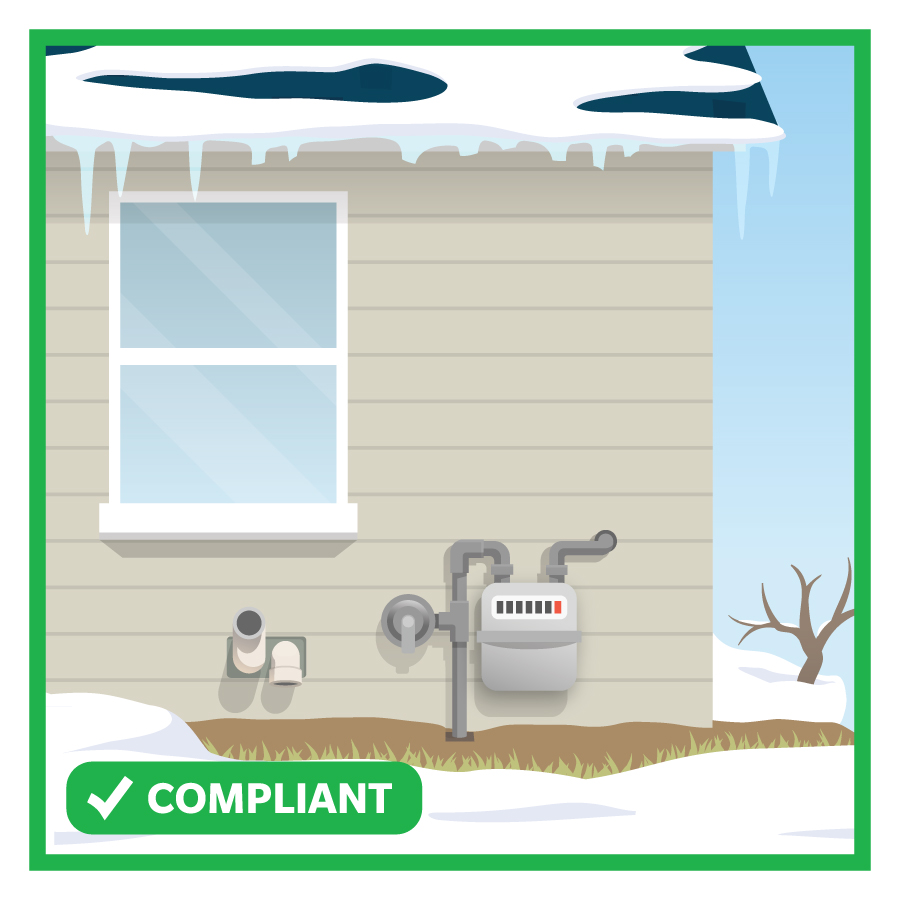
Chimneys and vents for gas appliances should also be cleared following a major snow or ice storm to enable proper venting, two-way air flow and to prevent equipment malfunction or CO poisoning. Make sure to locate your vents before the first storm of the season.
Don't
Do
Remove snow and ice from the meter or appliance vent pipe carefully with a broom or by hand; do not kick your meter to break or clear ice. Do not use a shovel because it can damage the meter.
Do not shovel snow up against the meter or vent pipe. After clearing snow from your roof, double-check to make sure your meter and vents are clear.
Remove icicles from overhead eaves and gutters to assure dripping water does not splash and freeze on the meter or vent pipes. Contact a qualified roofing vendor if you cannot safely remove the snow and ice yourself.
Clear a path to the meter so emergency responders and our employees have access.